
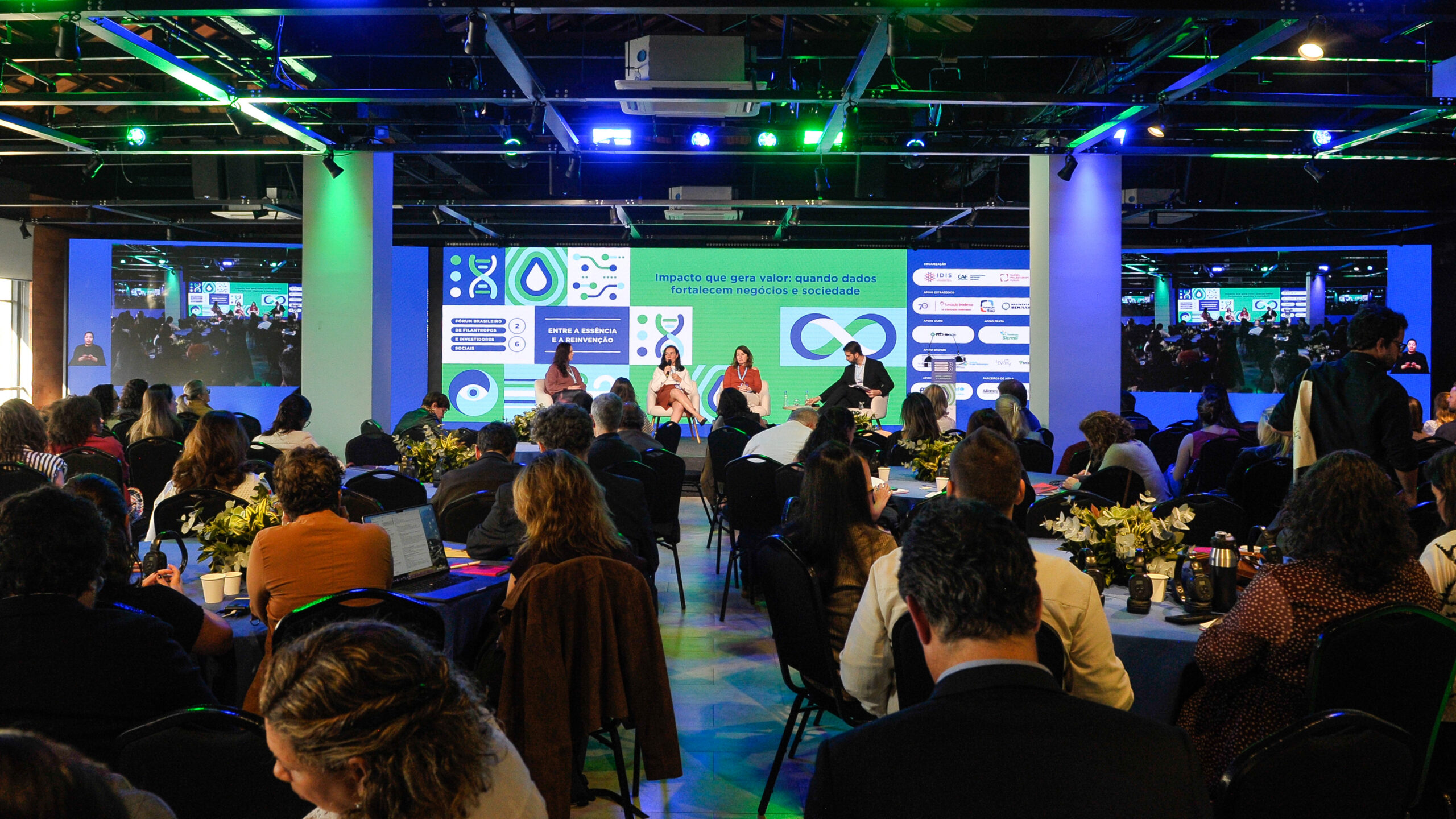
What does it mean to reinvent philanthropy while staying true to what matters most?
That was the question at the heart of the Brazilian Forum of Philanthropists and Social Investors in São Paulo last week. But it was also the question I found myself reflecting on between sessions and conversations. Everywhere I turned, there were examples of organisations rethinking how they work, building unlikely partnerships and exploring new ways to create impact. It was an inspiring introduction to a philanthropic ecosystem that combines deep local roots with a willingness to innovate. As the Anglo American Foundation expands its work in Brazil, we continue to learn from the people and organisations already shaping change across the country.
A thriving ecosystem built on collaboration
One of my strongest impressions was the scale and maturity of Brazil’s philanthropic landscape. Alongside large, established foundations were organisations working directly with communities, supported by a growing network of institutions that help the sector connect, learn and collaborate.
Across the Forum, familiar themes surfaced again and again: the importance of partnerships, the role of public policy, measuring impact and the potential of collective action. While the context may be different, many of the discussions reflected challenges and opportunities we recognise in our own work. What stood out most was the emphasis placed on local leadership. Several sessions explored how the people closest to a challenge are often best placed to shape solutions. The importance of place, trust and community knowledge came through in countless examples and conversations.
These conversations reinforced something we strongly believe at AAF: we start by listening. Philanthropy’s role is to connect people, ideas, capital, and influence, but impact depends on understanding local realities and empowering those already leading change.
Reinvention without losing sight of purpose
A recurring theme throughout the Forum was how philanthropy can evolve to meet a rapidly changing world. Sessions explored new approaches to funding, persistent inequalities, the role of data and impact measurement, and the future of philanthropy across Latin America.
I was struck by the breadth of work being supported across Brazil. Foundations are investing in education and culture, working alongside communities, delivering programmes and contributing to advocacy efforts. There is a strong institutional foundation on which the sector can continue to build. At the same time, there was a clear appetite to push beyond established approaches. The discussion is shifting towards how different forms of capital can work together, how new partnerships can unlock greater impact and how philanthropy can respond to increasingly complex social and environmental challenges.
In her closing remarks, IDIS CEO Paula Fabiani reflected on the idea of reinvention, not as a departure from philanthropy’s core principles, but as a way of continuing to advance them. At its heart, philanthropy remains focused on strengthening civil society, reducing inequality and helping to build a fairer and more sustainable future.
Beginning a new chapter
For AAF, this visit marked the beginning of an important new chapter. It offered an opportunity to better understand Brazil’s philanthropic ecosystem, build new relationships and explore possibilities for future collaboration.
It also prompted reflection on questions that extend far beyond Brazil. How do we strengthen local ecosystems? How do we mobilise different forms of capital to drive greater impact? And how do we build the partnerships needed to address increasingly complex challenges?
We do not claim to have all the answers. But the conversations in São Paulo made one thing clear: some of the most valuable insights emerge when people come together with a shared willingness to learn, collaborate, and view familiar challenges from new perspectives.